
OVERCOMING AI ROI SCARCITY IN ENERGY INDUSTRY
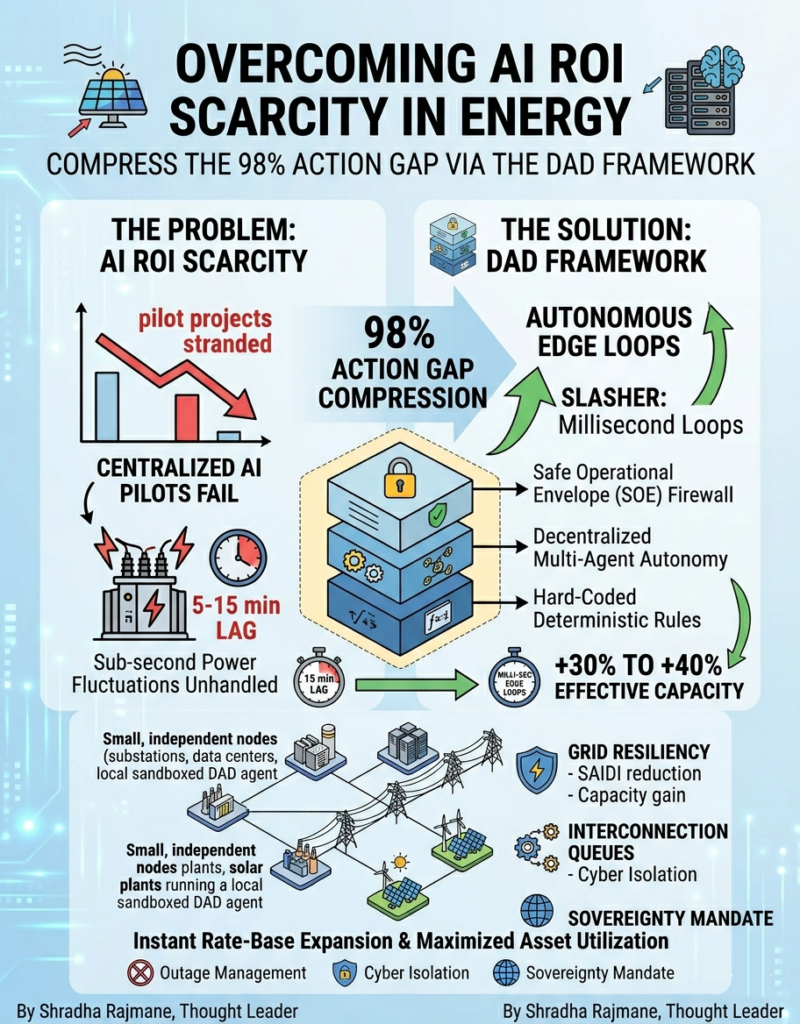
The global energy landscape in 2026 has reached a critical operational inflection point. Traditional power networks are colliding with severe macroeconomic and engineering frictions: the Intermittency Paradox caused by uncoordinated renewable growth, the Compute-Energy Paradox driven by flat-line hyper-scale AI workloads, an acute scarcity of realized ROI on pilot-phase AI investments, and heightened Sovereignty Mandates that treat grid infrastructure as an isolated national security layer.
The Sovereign Grid Brief: Resolving Transatlantic & Asian Infrastructure Fractures via Agentic DAD Framework
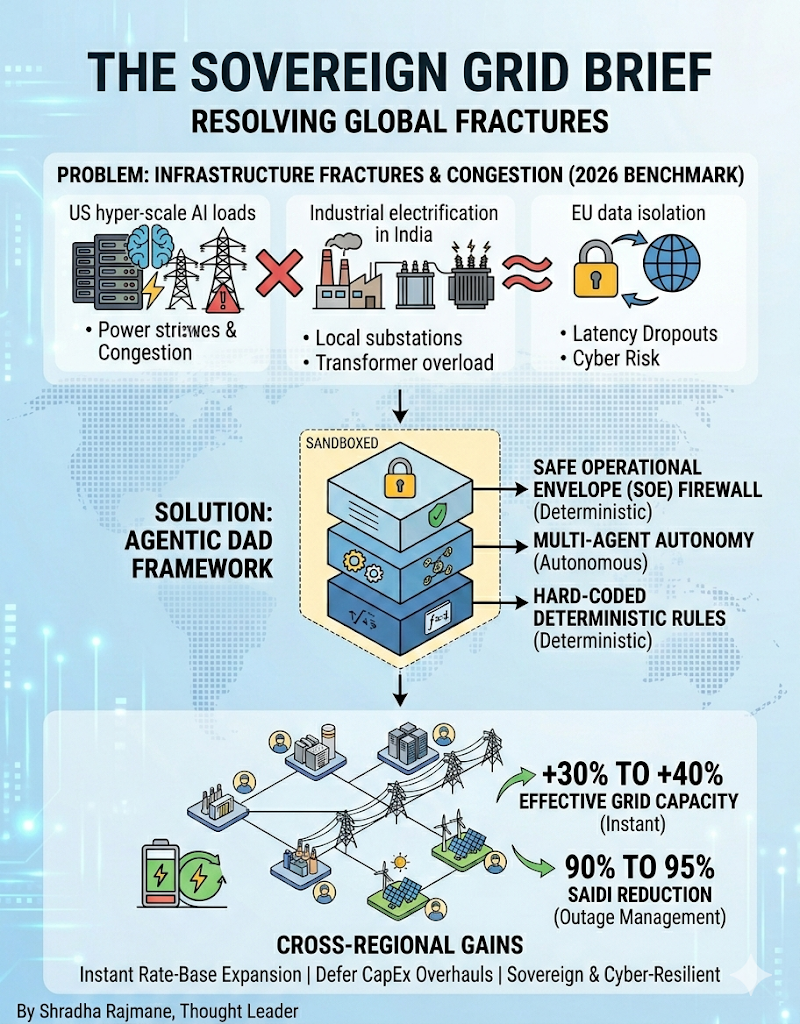
By late 2026, global power networks are colliding with the limits of centralized control loops. Surging load profiles driven by flat-line hyper-scale AI deployments in North America, aggressive industrial electrification in India, and cross-border security parameters in the EU have exposed a fundamental physics mismatch. Centralized SCADA layers rely on 5-to-15-minute polling cycles, while intermittent renewable transitions and computational steps fluctuate in milliseconds, creating a projected $35 Billion annual global operational congestion penalty.
The Compute-Energy Paradox: Orchestrating Hyper-Scale Data Center Load Management Through the Agentic DAD Framework
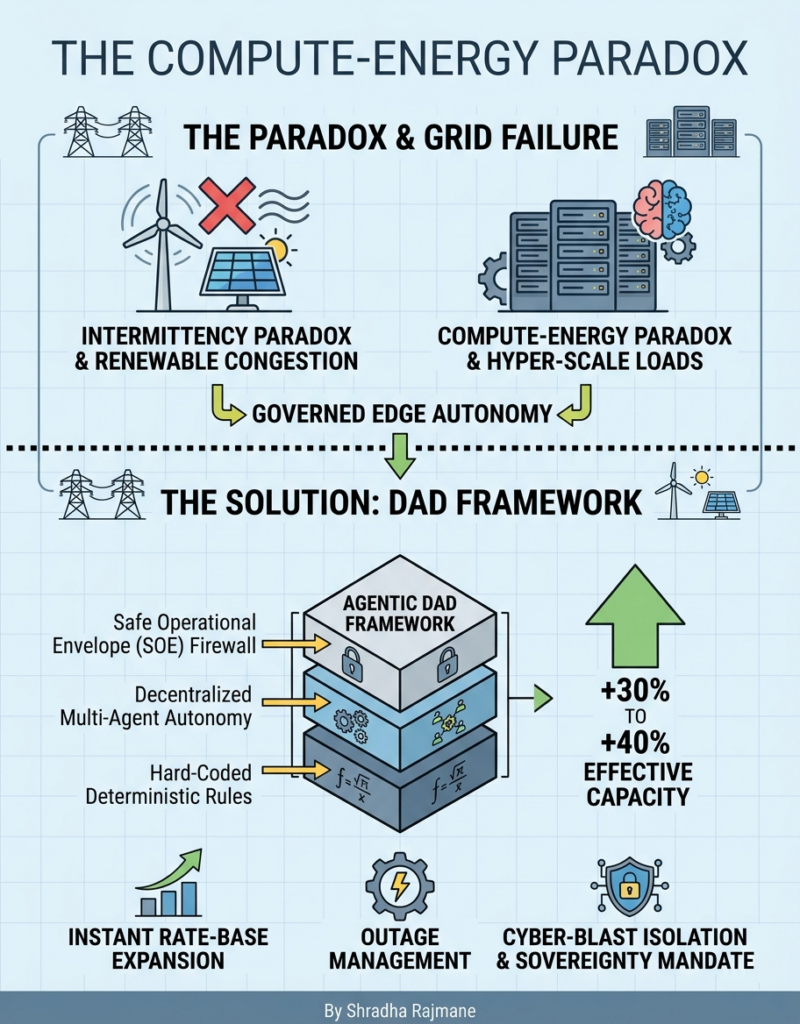
The exponential race to build next-generation artificial intelligence architectures has run headlong into a legacy physical constraint: the structural limitations of the global power grid. As hyper-scalers accelerate the deployment of gigawatt-scale data centers to accommodate massive AI workloads, the computing ecosystem has triggered an unprecedented surge in localized energy demand. This structural shift cannot be accommodated by current utility infrastructure; modernizing a standard transmission grid requires an average capital cycle of 7 to 15 years, creating an immediate, structural capacity deficit.
The Sovereign Resilient Grid: Resolving the $35B Infrastructure Bottleneck and the Compute-Energy Paradox Through Governed Edge Autonomy
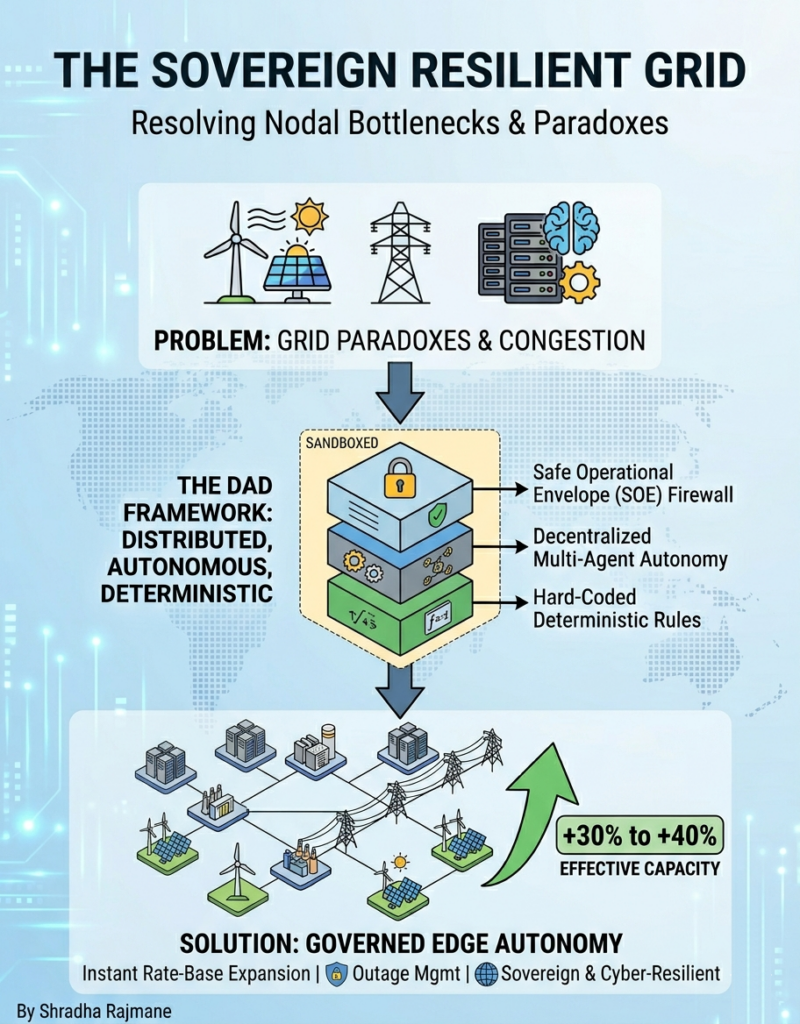
Global energy infrastructure is colliding with three severe macroeconomic frictions: the Intermittency Paradox caused by millions of uncoordinated renewable nodes, the Compute-Energy Paradox driven by soaring hyper-scale data center loads, and emerging Sovereignty Risks that threaten critical infrastructure dependencies.
2026 Grid BENCHMARK : IMPERATIVE CHALLENGES
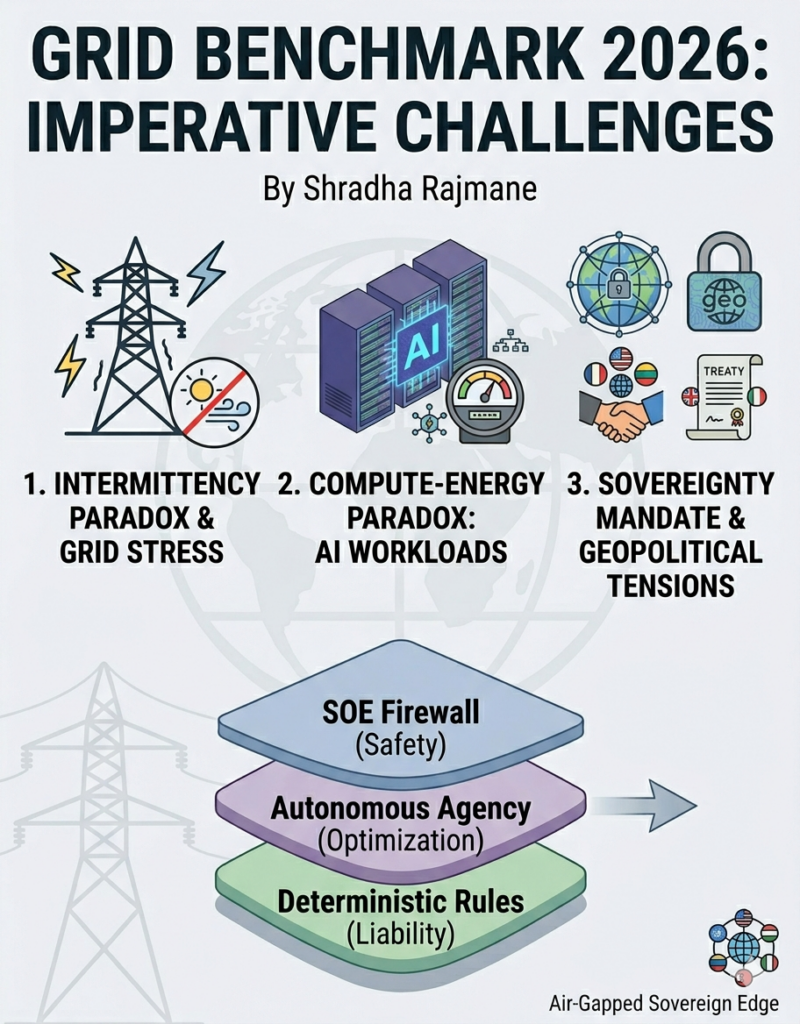
The global energy landscape in 2026 has reached a critical operational inflection point. Traditional power networks are colliding with severe macroeconomic and engineering frictions: the Intermittency Paradox caused by uncoordinated renewable growth, the Compute-Energy Paradox driven by flat-line hyper-scale AI workloads, an acute scarcity of realized ROI on pilot-phase AI investments, and heightened Sovereignty Mandates that treat grid infrastructure as an isolated national security layer.