
In the Power & Energy Industry, a 95 AI accuracy rate is not a success. It is a liability.
In the P&E industry, accuracy isn’t just a metric—it’s a requirement for stability. Whether it’s predicting energy demand for a city grid or forecasting throughput for an oil pipeline, the “cost of being wrong” is immense.
Empowering the P&E industry(Power & Energy) with Modern Predictive Analytics
In the P&E industry, accuracy isn’t just a metric—it’s a requirement for stability. Whether it’s predicting energy demand for a city grid or forecasting throughput for an oil pipeline, the “cost of being wrong” is immense.
Agentic National Level Unified SCADA Vision for India, SOP
Maturity of SCADA systems are scattered across the Power & Energy Industry. It has broken into below 5 levels
Grid Loss Prevention using Inference Agent
$100B leaks from the global grid every year as non-technical loss. Recovering at least 2% which is approx. $2B (or 1.2B net recovered revenue) may not require a single new sensor as Inference AI Agents help to solve it. Here’s the why and how
OVERCOMING AI ROI SCARCITY IN ENERGY INDUSTRY
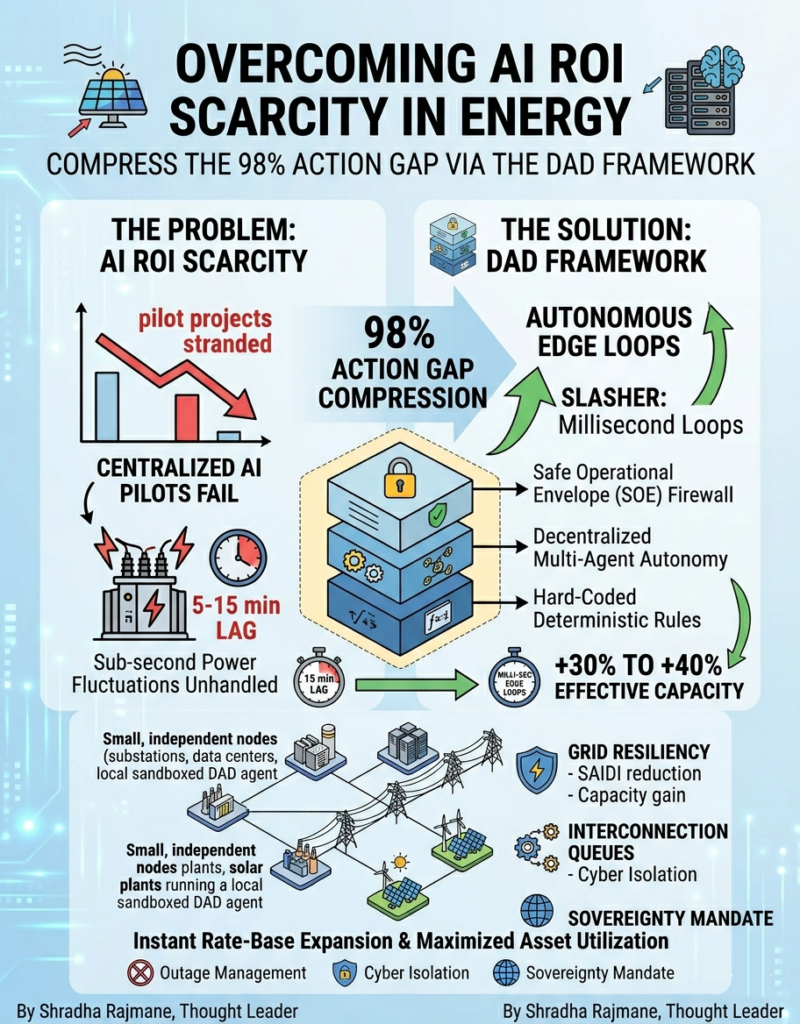
The global energy landscape in 2026 has reached a critical operational inflection point. Traditional power networks are colliding with severe macroeconomic and engineering frictions: the Intermittency Paradox caused by uncoordinated renewable growth, the Compute-Energy Paradox driven by flat-line hyper-scale AI workloads, an acute scarcity of realized ROI on pilot-phase AI investments, and heightened Sovereignty Mandates that treat grid infrastructure as an isolated national security layer.
The Sovereign Grid Brief: Resolving Transatlantic & Asian Infrastructure Fractures via Agentic DAD Framework
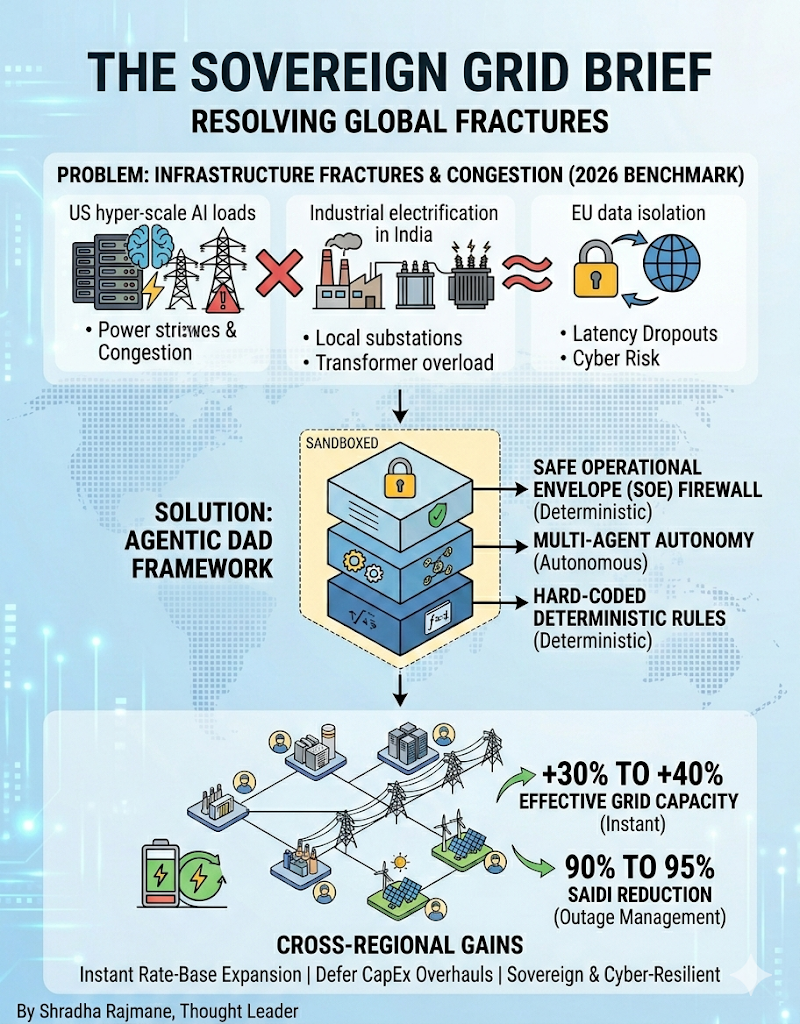
By late 2026, global power networks are colliding with the limits of centralized control loops. Surging load profiles driven by flat-line hyper-scale AI deployments in North America, aggressive industrial electrification in India, and cross-border security parameters in the EU have exposed a fundamental physics mismatch. Centralized SCADA layers rely on 5-to-15-minute polling cycles, while intermittent renewable transitions and computational steps fluctuate in milliseconds, creating a projected $35 Billion annual global operational congestion penalty.
The Compute-Energy Paradox: Orchestrating Hyper-Scale Data Center Load Management Through the Agentic DAD Framework
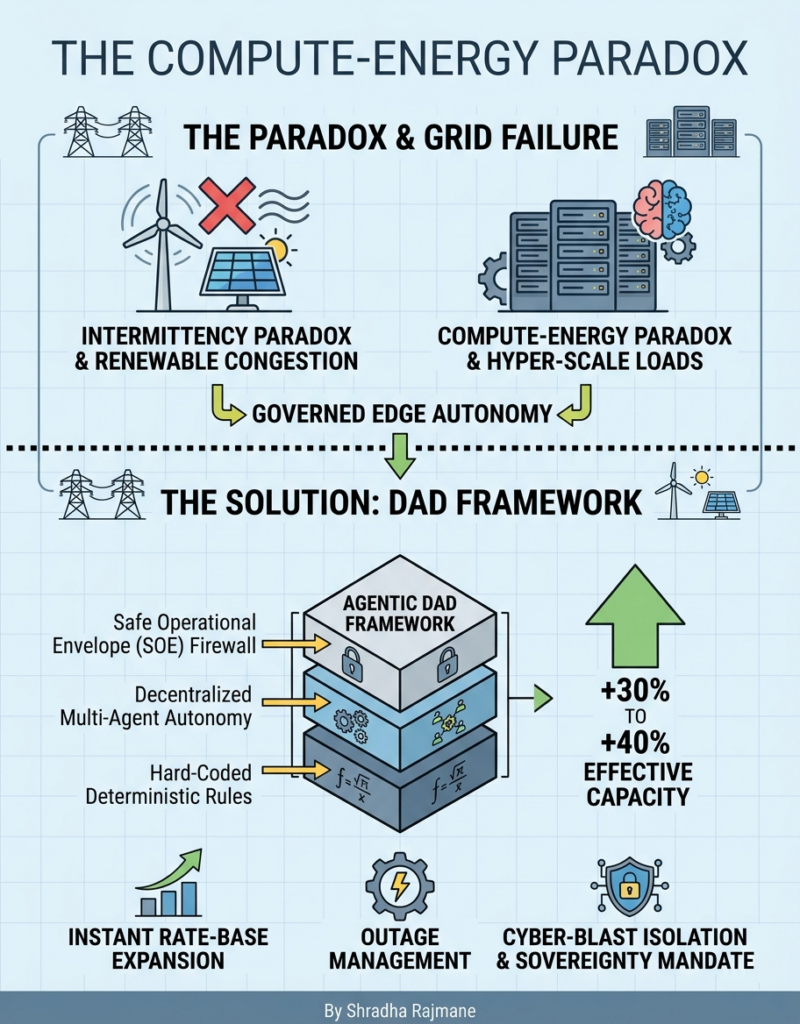
The exponential race to build next-generation artificial intelligence architectures has run headlong into a legacy physical constraint: the structural limitations of the global power grid. As hyper-scalers accelerate the deployment of gigawatt-scale data centers to accommodate massive AI workloads, the computing ecosystem has triggered an unprecedented surge in localized energy demand. This structural shift cannot be accommodated by current utility infrastructure; modernizing a standard transmission grid requires an average capital cycle of 7 to 15 years, creating an immediate, structural capacity deficit.
The Sovereign Resilient Grid: Resolving the $35B Infrastructure Bottleneck and the Compute-Energy Paradox Through Governed Edge Autonomy
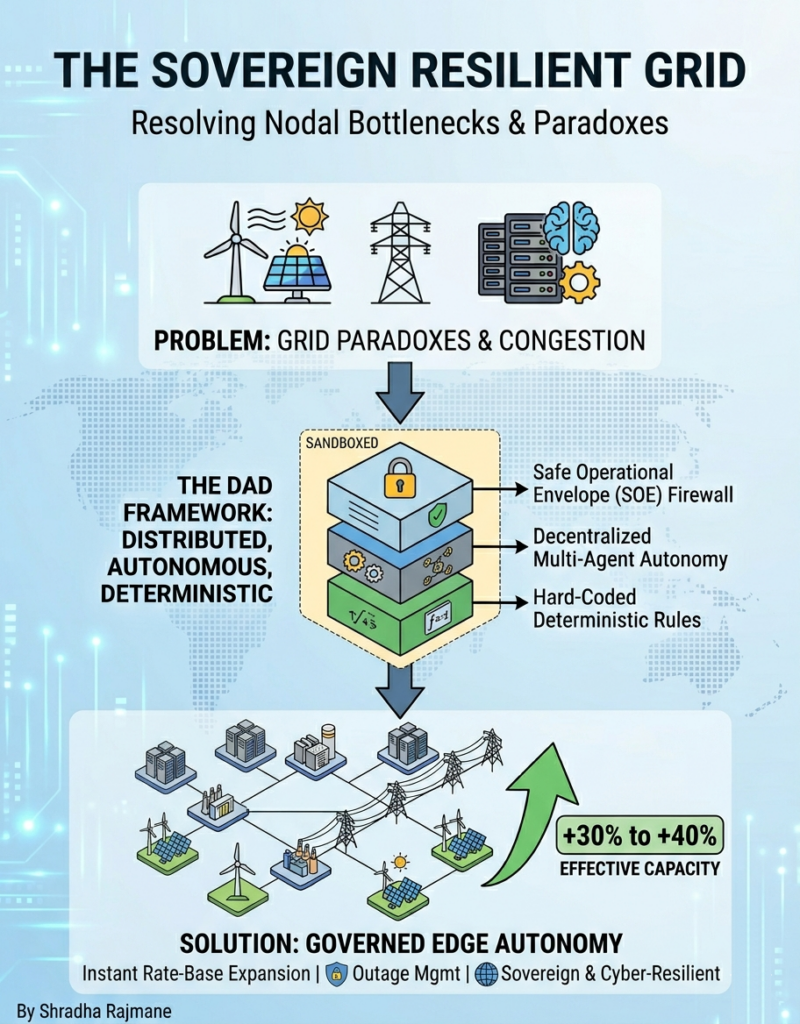
Global energy infrastructure is colliding with three severe macroeconomic frictions: the Intermittency Paradox caused by millions of uncoordinated renewable nodes, the Compute-Energy Paradox driven by soaring hyper-scale data center loads, and emerging Sovereignty Risks that threaten critical infrastructure dependencies.
2026 Grid BENCHMARK : IMPERATIVE CHALLENGES
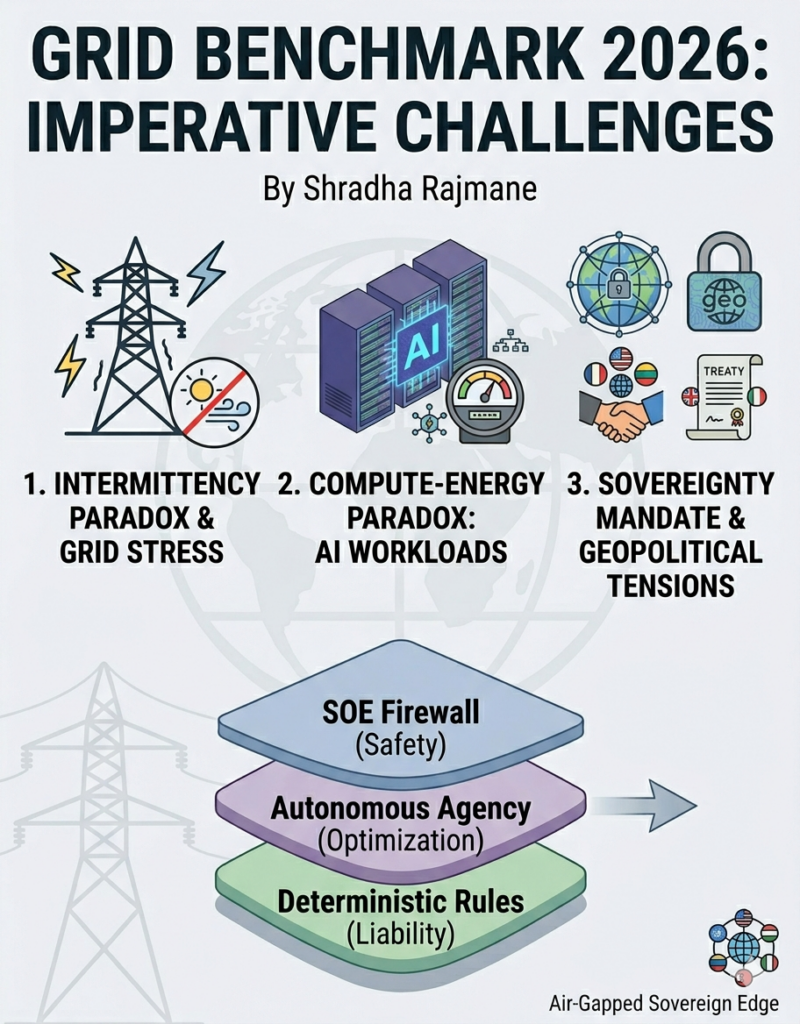
The global energy landscape in 2026 has reached a critical operational inflection point. Traditional power networks are colliding with severe macroeconomic and engineering frictions: the Intermittency Paradox caused by uncoordinated renewable growth, the Compute-Energy Paradox driven by flat-line hyper-scale AI workloads, an acute scarcity of realized ROI on pilot-phase AI investments, and heightened Sovereignty Mandates that treat grid infrastructure as an isolated national security layer.